Fund of the Month (May'26): South Africa's GEPF
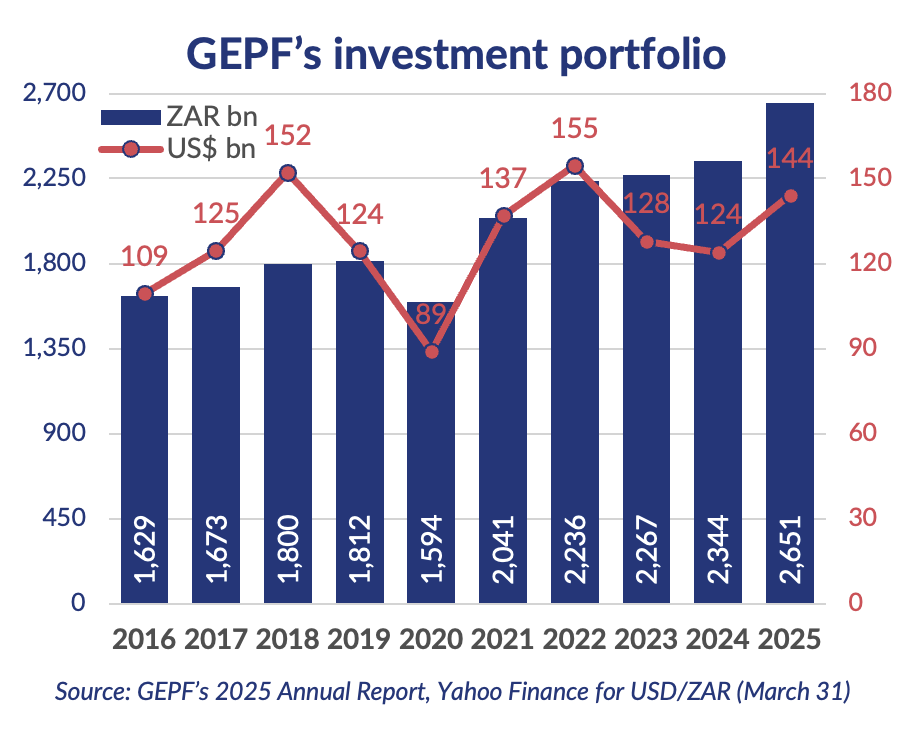
1st May, 2026South Africa’s GEPF is the continent’s largest institutional investor, with a US$ 144 billion portfolio as of March 31, 2025, which is invested by its asset manager organization, the Public Investment Corporation (PIC). We were delighted to speak with GEPF’s Principal Executive Officer, Mr. Musa Mabesa, about the fund’s growth, the current strategy to put that capital to work, and its future outlook.
[GSWF] The GEPF has grown significantly in the past two decades – can you please walk us through the fund’s journey, including successes and challenges?
[GEPF] We have experienced a consistent increase of c.5% in our annual contributions, which together with healthy returns has allowed us to steadily grow the funds. The success can be attributed to a robust strategic asset allocation, our responsible investing approach and good governance. As per challenges, we have faced a volatile environment and sluggish economic growth, but we have been able to weather such storms. Also, we have been focusing on improving the fund’s administration of pension benefits, particularly ensuring that unclaimed benefits are paid, which is an issue in South Africa.
[GSWF] GEPF returned 8.8% p.a. between FY06 and FY25. How did it do that despite a conservative investment strategy?
[GEPF] We follow a liability-driven investment approach, modeling our asset allocation based on the horizon of our liabilities, inflation and interest rates. We are ever mindful of the yield potential of real assets and private markets but have the constraints of a defined benefit (DB) scheme and need to align our investments with the demographics of our beneficiaries. At present, we have over 550,000 pensioners, and beneficiaries, out of a total membership of about 1.7 million members. Our returns are calculated and reported in local currency: the fund can invest up to 20% outside of South Africa, and that portion is translated back into rands.
[GSWF] GEPF pays more benefits than receives contributions, despite South Africa’s young population. Is this sustainable?
[GEPF] The contributions that we receive and the benefits that we pay are distant in time, and GEPF is cash flow positive thanks to dividends and interest, with cash reserves of ZAR 37 billion in 2025. We carry out an actuarial valuation every three years, and our latest exercise defined our funding level at 119% (excluding the contingency reserves) or 82% (including the contingency reserves).
[GSWF] How does it work with PIC: who defines the asset allocation, and do you expect any changes in the next few years?
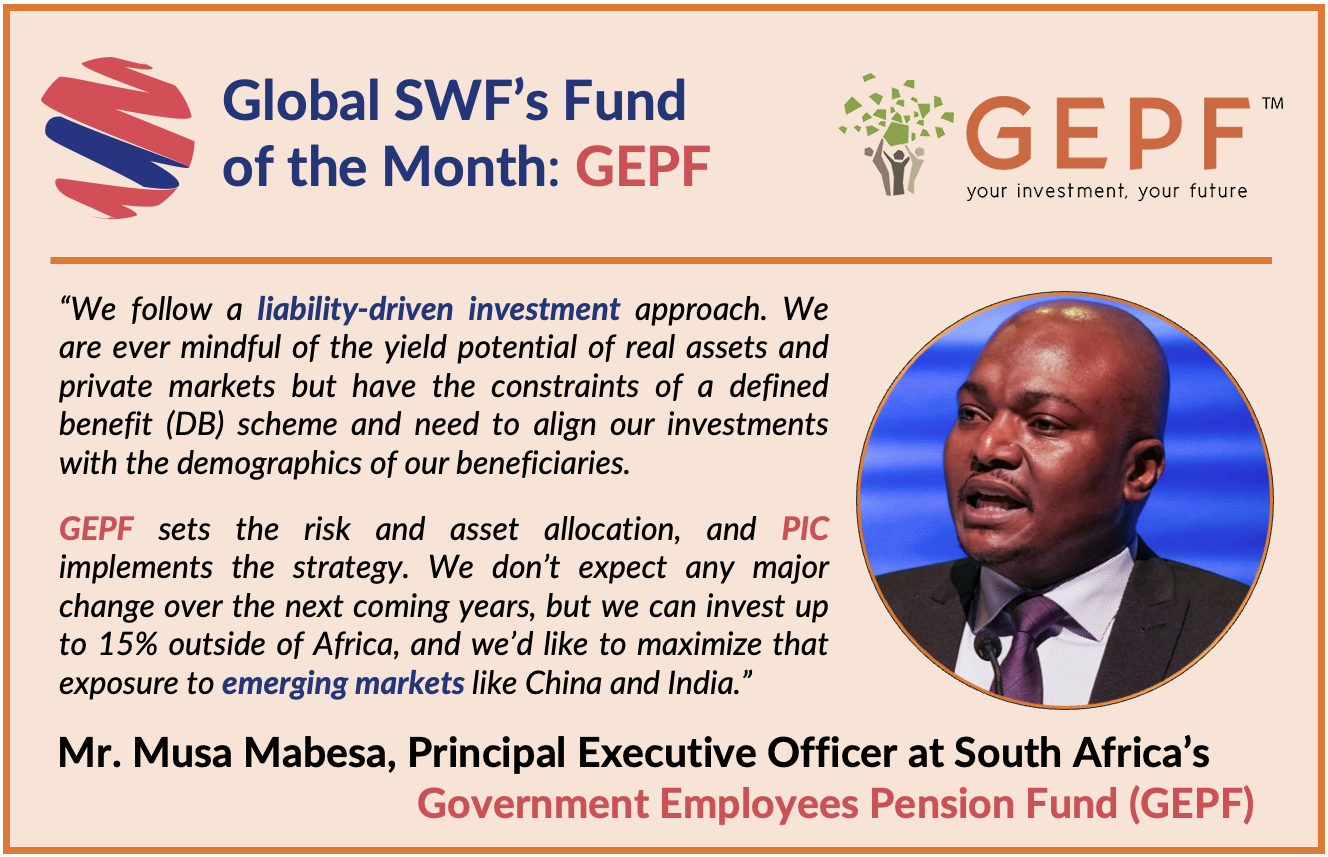
[GEPF] GEPF sets the risk and asset allocation, and PIC implements the strategy on our behalf. We are mindful of our scale and the impact of our investments on the South African economy, so we don’t expect any major change over the next coming years. That said, we can invest up to 15% outside of Africa, and we’d like to maximize that exposure to emerging markets like China and India.
[GSWF] GEPF and PIC have seen a large rotation of Board members and Executives. How do you ensure good governance?
[GEPF] Since the Mpati Commission of Inquiry, we have strengthened our reporting and oversight of PIC’s activities. The operations between GEPF and PIC are complex but have enough checks and balances to ensure that the implementation and monitoring of the investment mandate can continue with the right skills and management at any given time. We meet regularly and hold our managers accountable to what is expected of them, and they report to us regularly to ensure alignment of interest.
[GSWF] How many people does GEPF employ? Will it open any office overseas in the future?
[GEPF] GEPF employs about 70 people. 85% of our portfolio is in South Africa, so there are no immediate plans for any office overseas.
[GSWF] Personally, you have been at the helm of GEPF for five years now. How has it been, and what are your goals for the next five years?
[GEPF] It has been challenging yet fulfilling because of GEPF’s complexity and the important role we play in the South African economy. I don’t take the responsibility lightly, as the capital belongs to our members and our actions can impact their pensions.
My priority for my second term is to enhance our member services and fund administration, which is very important to us. And obviously, to continue the success of our investment activities, which allows us to pay back to the pensioners and their beneficiaries.